+(91)-9871163831
 B-195/194(B) Kahrani Ind. Area, Bhiwadi,
Rajasthan-301019, (India)




| Model | Rotating Payoff Size (MM) | Rotating Takeup Size ( MM) | Rotating Catterpillar Contact Length ( MM) | MAX RPM |
| SMEPL/DT/1250/1600 | 1250 | 1600 | 1500 | 75 |
| SMEPL/DT/1600/2000 | 1600 | 2000 | 1500 | 60 |
| SMEPL/DT/1600/2200 | 1600 | 2200 | 1500 | 50 |
| SMEPL/DT/1600/2600 | 1600 | 2600 | 2000 | 40 |
| SMEPL/DT/2600/2600 | 1600 | 2600 | 2000 | 40 |
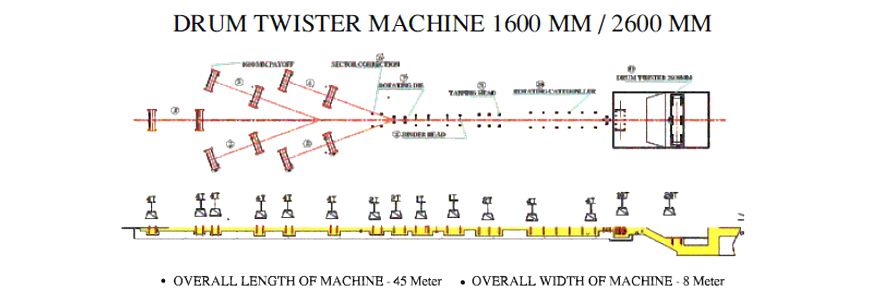
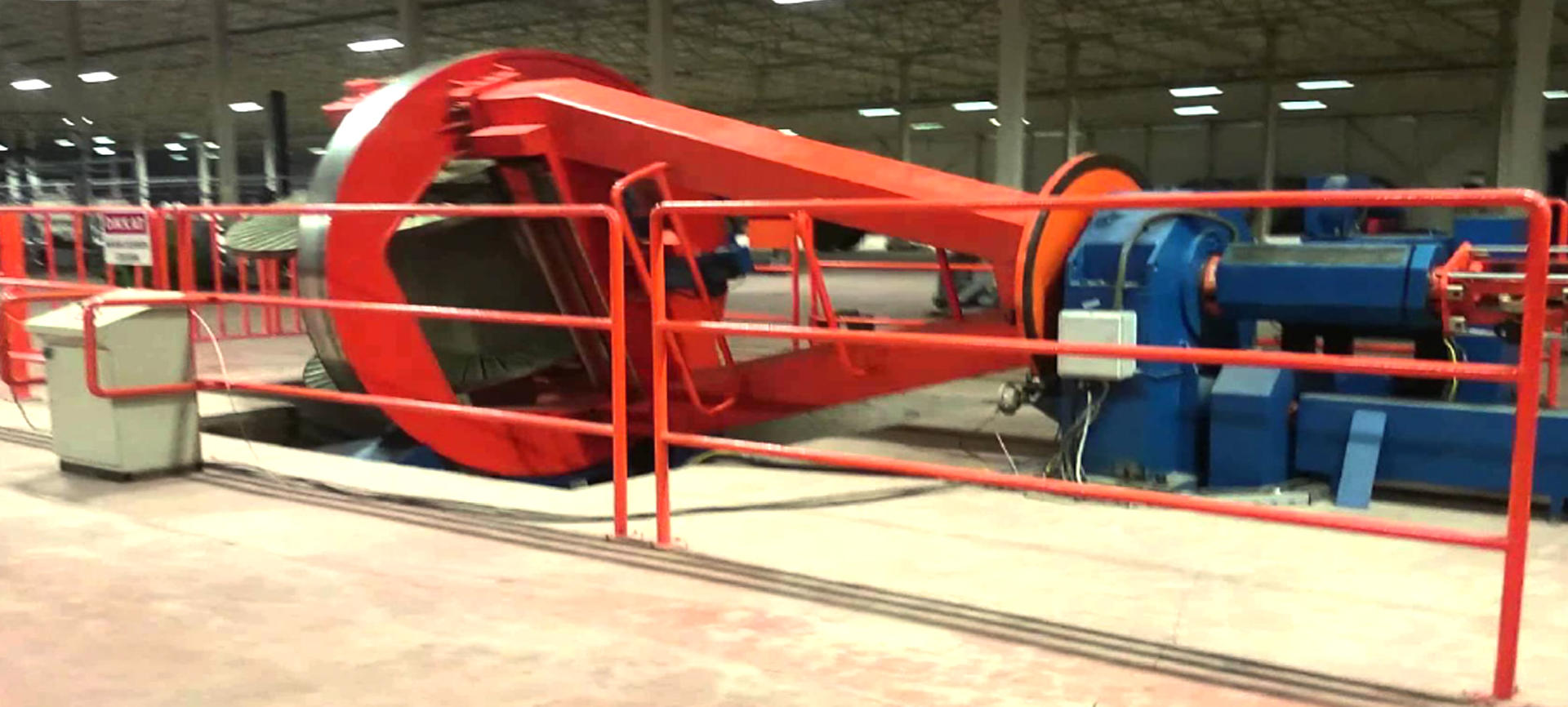
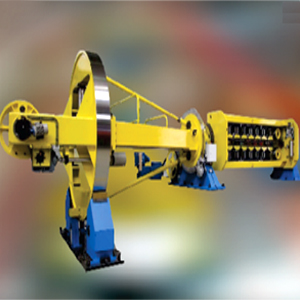
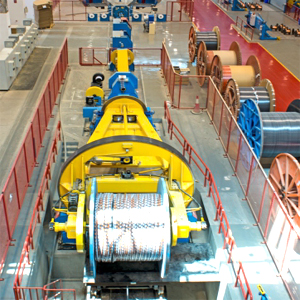
A Drum Twister Machine is specialized wire and cable machinery used for twisting and cabling multiple insulated wires or cable elements together. It is commonly used to produce various power, control, flexible, and industrial cables.
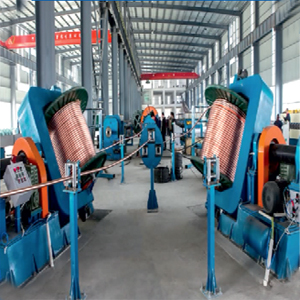
Individual wires or cable elements are supplied through the pay-off system and guided into the twisting section. The rotating drum or twisting assembly combines the elements according to the required lay, while the finished cable is collected onto the take-up drum.
A Drum Twister Machine is used to combine multiple wires or cable cores into a finished cable with a controlled lay length and uniform construction. The machine is suitable for applications where consistent cable formation and efficient production are required.
Depending on the machine configuration, Drum Twister Machines can be used for power cables, control cables, flexible cables, instrumentation cables, multi-core cables, and other suitable cable products.
Yes. Machine specifications can be selected according to the individual wire diameter, number of cores, finished cable diameter, cable construction, and required production capacity.
A Drum Twister Machine can offer efficient cable twisting, controlled lay formation, stable cable handling, consistent production, and suitability for different cable constructions and production requirements.
Important factors include cable type, number of cores, individual wire diameter, finished cable diameter, lay length, production speed, drum size, cable construction, and required automation level.
Automation options can be provided according to the machine configuration and production requirements. These may include speed control, tension control, synchronized operation, monitoring systems, and other automated functions.