+(91)-9871163831
 B-195/194(B) Kahrani Ind. Area, Bhiwadi,
Rajasthan-301019, (India)



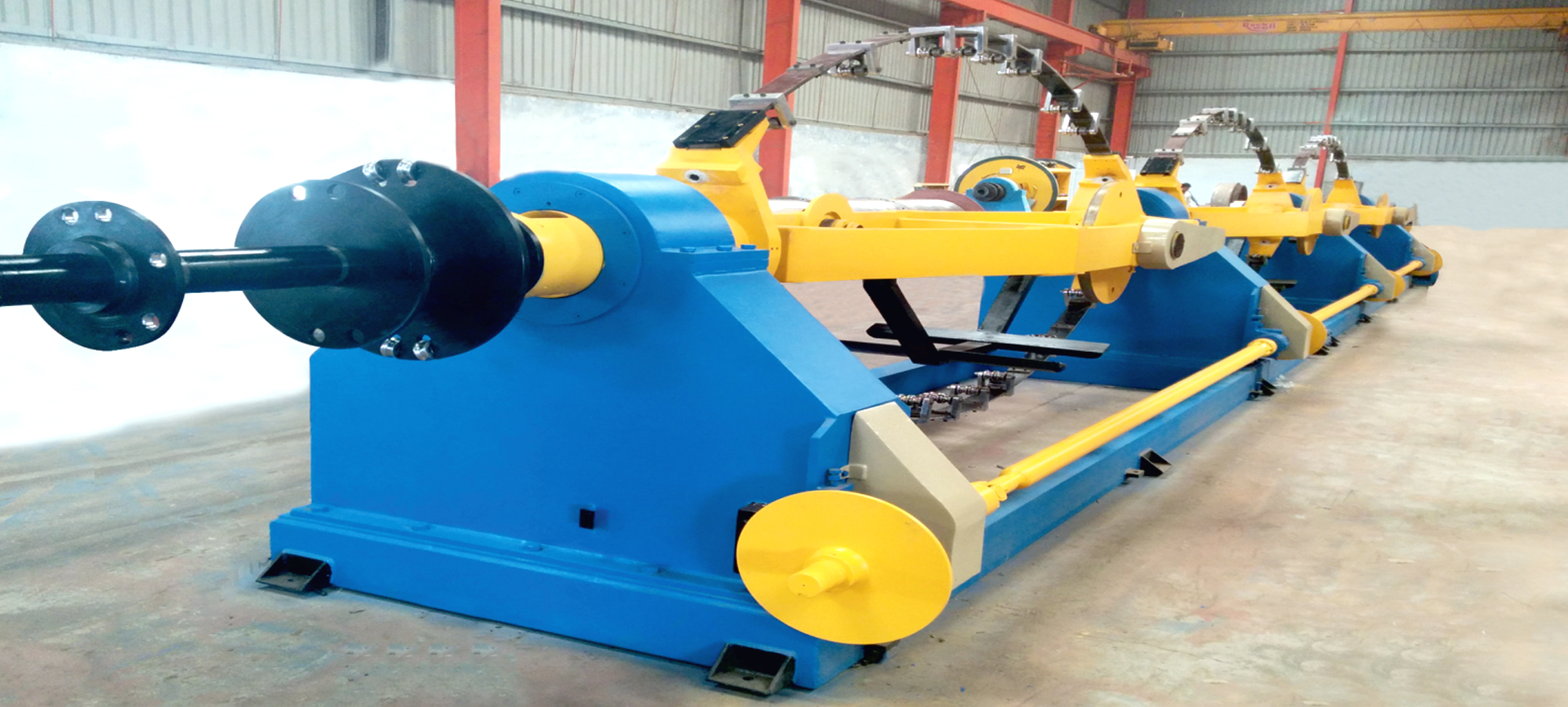


| Model | Wire/Core Dia | Rotor Speed (Rpm) | Main Motor (Kw) |
| SMEPL/SKP/1+3/1000 | 5-10mm | 500 | 50 |
| SMEPL/SKP/1+3/1250 | 5-18 mm | 300 | 60 |
| SMEPL/SKP/1+4/1250 | 5-18 mm | 300 | 60 |
| SMEPL/SKP/1+4/1600 | 5-18 mm | 300 | 60 |
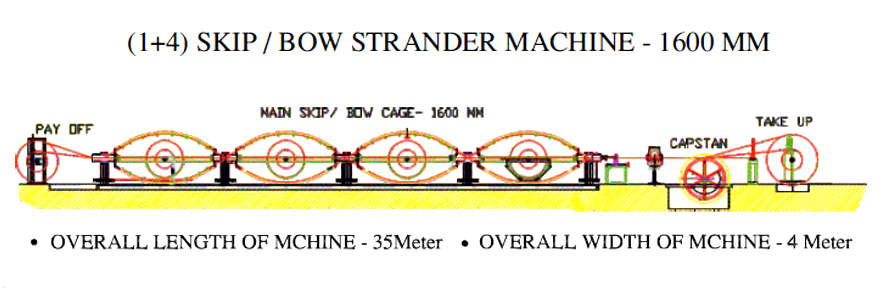
A Bow Type Laying Machine is commonly used for laying insulated wires, control cables, flexible cables, and other suitable cable constructions. The machine helps achieve consistent lay length, cable formation, and production quality.
Individual wires or cable elements are supplied through the pay-off system and guided through the rotating bow. The bow rotates around the cable core to form the required lay, while the take-up system collects the finished cable.
Depending on the machine configuration, it can be used for flexible cables, control cables, instrumentation cables, multi-core cables, and other suitable wire and cable products.
Key advantages can include consistent cable formation, controlled lay length, efficient handling of multiple cable elements, reliable operation, and suitability for various cable manufacturing applications.
Yes. Machine configuration can be selected according to the required cable diameter, number of cores, individual wire size, lay length, and production capacity.
Important factors include the number of cores, individual wire diameter, finished cable diameter, cable construction, required lay length, production speed, take-up size, and desired production capacity.
Depending on the specific application and machine configuration, suitable conductors and cable elements can be processed. The required material, diameter, construction, and production parameters should be provided when selecting the machine.
Both machines use specialized wire and cable laying or stranding principles, but their applications can differ according to the conductor or cable elements being processed. A Skip Laying Machine is generally configured for laying cable elements together, while a Skip Stranding Machine is commonly used for stranding individual wires or conductors.