+(91)-9871163831
 B-195/194(B) Kahrani Ind. Area, Bhiwadi,
Rajasthan-301019, (India)



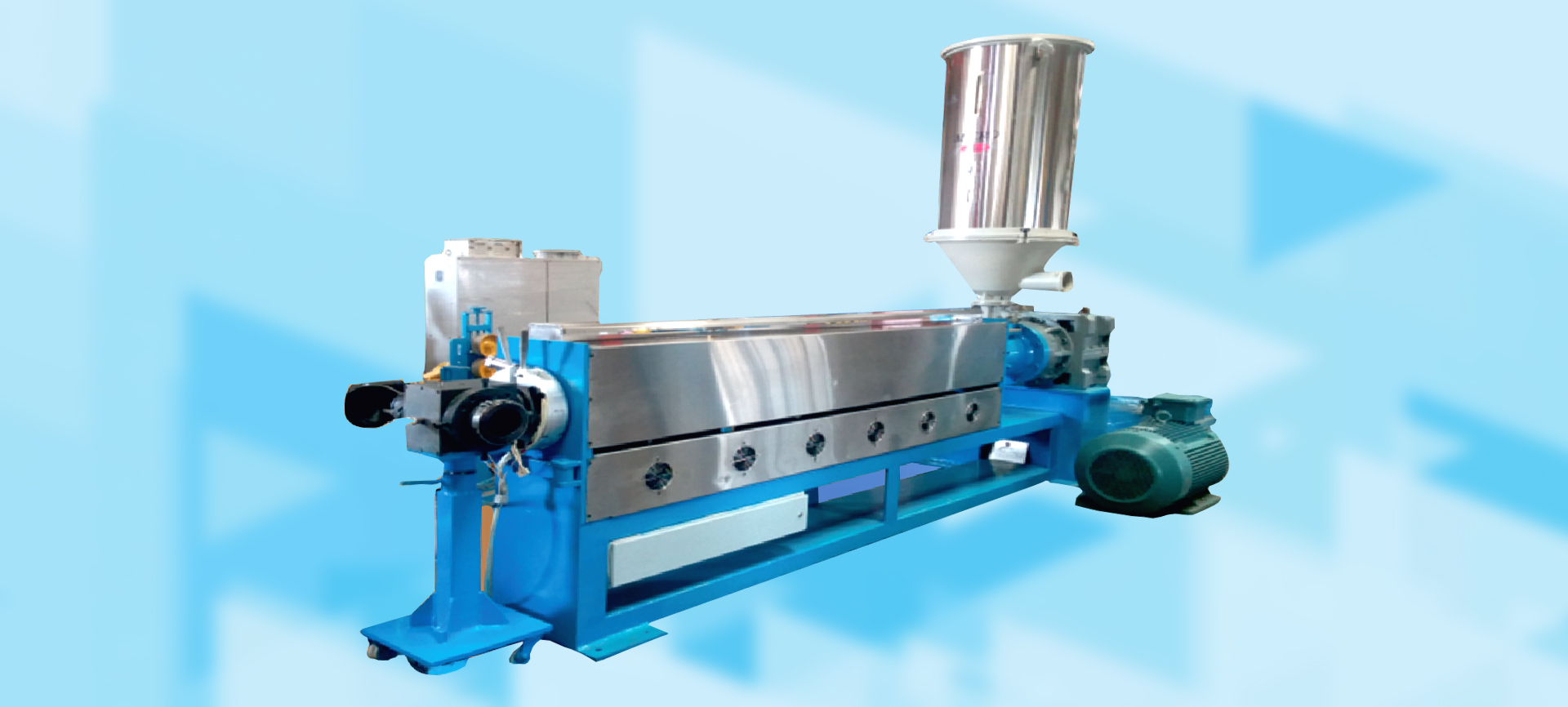
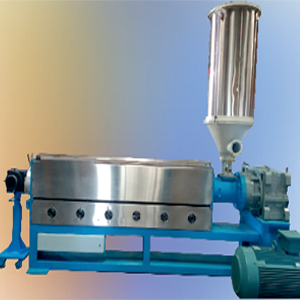
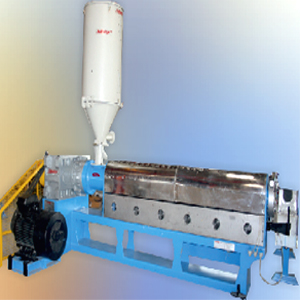

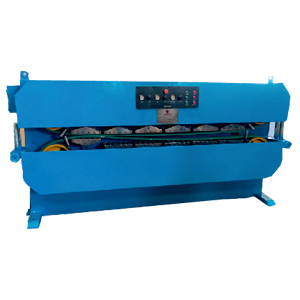
| Model | Max Speed (Rpm) | Kg /Hr. PVC / PE | Driven Motors (Kw) |
| SMPEL/EL/45 | 150 | 80 / 50 | 15 |
| SMPEL/EL/65 | 120 | 150 / 90 | 30 |
| SMPEL/EL/80 | 100 | 280 / 150 | 55 |
| SMPEL/EL/100 | 80 | 375 / 225 | 75 |
| SMPEL/EL/120 | 80 | 550 / 325 | 100 |
| SMPEL/EL/150 | 60 | 700 / 425 | 200 |
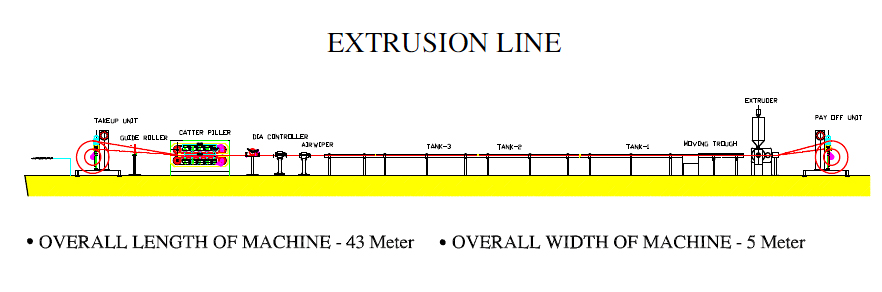
An Extrusion Line is specialized wire and cable manufacturing equipment used to apply insulation or sheathing material continuously around a wire, conductor, or cable. It is an essential part of the manufacturing process for insulated wires and cables.
A Cable Extrusion Line is used for insulating and sheathing wires and cables with suitable polymer materials. Depending on the application, it can be configured for producing electrical wires, power cables, control cables, automotive wires, flexible cables, and other cable products.
Depending on the extrusion system and product requirements, suitable materials may include PVC, PE, XLPE, LSZH, rubber compounds, and other insulation or sheathing materials compatible with the machine configuration.
Depending on the machine configuration, extrusion lines can be used for manufacturing electrical wires, power cables, control cables, flexible cables, automotive wires, communication cables, and other insulated or sheathed cable products.
The insulation or sheathing compound is fed into the extruder, where it is heated and processed before being applied around the conductor or cable core through a suitable extrusion tooling system. The extruded product is then cooled, tested where required, and collected using a take-up system.
A typical cable extrusion line may include a pay-off system, preheater, extruder, crosshead and tooling, cooling trough, diameter monitoring or control equipment, spark tester where applicable, caterpillar haul-off, printing or marking equipment, accumulator, and take-up system.
Yes. Machine specifications, crossheads, tooling, and other components can be selected according to the required conductor and finished cable diameter range.
Important factors include conductor size, finished cable diameter, insulation or sheathing material, required insulation thickness, extrusion output, production speed, cooling requirements, quality requirements, automation level, and production capacity.
Yes. Depending on the extruder, tooling, and line configuration, cable extrusion equipment can be designed for insulation extrusion, sheathing extrusion, or both processes.
Yes. Automation options can be provided according to the production requirements. These may include temperature control, pressure monitoring, speed synchronization, diameter control, thickness monitoring, material feeding systems, process monitoring, and other automated functions.